The ‘Compact Submarines’ – A gamechanger in Underwater Warfare Operations

The author, a consultant for DRASS, challenges the conventional wisdom that modern, non-nuclear submarines must necessarily be large, fast, heavily armed and expensive platforms. A 25 minute read.
In modern maritime warfare, ‘compact submarines’ represent a pivotal shift in underwater combat strategies, particularly effective in littoral zones. Contrary to some beliefs, advanced and heavily armed conventional submarines may not effectively counter the threat posed by these compact, agile adversaries. A smaller, quiet submarine operating in littoral waters, concealed by ambient noise and seabed clutter, enjoys a significant detection advantage over a conventional submarine. This advantage is crucial as, in submarine warfare, the first to detect and strike typically prevails, especially true for submarines that can blend seamlessly into the seabed or surface clutter.
This leads to an important question: How effective can larger submarines be in waters shallower than 100 meters against quieter, equally armed submarines with comparable detection systems? This scenario highlights a substantial gap in post-war underwater warfare development, which has predominantly favoured vessels suited for the open ocean (blue water) operations over those optimized for the shallow, complex (green and brown) waters where future conflicts are likely to occur. As conflicts shift toward these environments, the limitations of conventional submarine strategies become starkly apparent.
Therefore, what is the most effective method to counter these small, dangerous compact submarines? The unequivocal answer lies in deploying other compact vessels that may possess a technological edge, thus offering a strategic advantage over similar types. Advanced compact submarines could redefine engagement rules in littoral zones by leveraging their size, stealth, and capabilities to dominate areas where larger submarines find operation challenging. This strategy addresses the tactical challenges of littoral combat and reshapes the strategic landscape of maritime conflicts, ensuring adaptability and dominance in evolving naval warfare scenarios.
The trend of focusing on blue water capabilities has led to the development and acquisition of increasingly sophisticated conventional submarines, neglecting the crucial need to protect littoral waters and maritime interests closer to home shores. Additionally, there is an evident lack of effective capabilities to safeguard confined waters, channels, or crucial straits, which are vital for the free use of maritime spaces and the global economy against compact submarine threats. This gap in preparedness to counter such small vessels like compact submarines urgently needs addressing.

This oversight in strategic maritime defence planning suggests a necessary shift in focus. Naval forces must balance their capabilities to project power in open oceans with robust defences in nearshore and littoral zones. By enhancing littoral combat capabilities, particularly through the deployment of compact submarines and other suitable assets, comprehensive security can be ensured, safeguarding vital economic and strategic interests. This recalibration of naval priorities is essential for maintaining maritime dominance and securing the nation’s interests against emergent underwater threats.
Compact submarines, with their stealth, agility, and operational effectiveness, are ideally suited for operations in littoral waters. They pose formidable challenges for any naval force and underline the need for a strategic rethink in how naval power is projected in coastal and confined maritime spaces.
There exists a common misconception that favours larger, more heavily armed, faster submarines equipped with Air-Independent Propulsion (AIP) systems, greater endurance, and missile-launching capabilities as more effective and capable. Such myths often portray compact submarines as a second-tier option, chosen by less wealthy nations due to financial constraints, as they cannot afford the more expensive conventional models. This distorted view overlooks the reality that modern technology enables even small-sized submarines to be outfitted with advanced detection, command and control, communication, data collection and analysis, and weapon systems, ensuring operational capabilities comparable to those of larger submarines. However, a critical advantage of compact submarines is their smaller size, which in submarine warfare is decisive for survival. Much of what is touted as qualities that make submarines more effective are, in fact, unnecessary capabilities that serve only to justify exorbitant prices.
Compact Submarines
Before we delve into the comparison between compact and conventional submarines, let’s clarify some key concepts. Compact submarines represent a strategic class of naval assets that serve as an intermediary between Midget Submarines, typically weighing between 40 to 150 tonnes and primarily used for Special Forces Operations, and conventional submarines, which range from 1,500 to about 4,000 tonnes.
The design philosophy behind compact submarines is to encapsulate the operational capabilities and mission profiles of conventional submarines into a much smaller form. This integration aims to maximize efficiency and enhance stealth, making these submarines particularly effective for a variety of naval tasks.

The advantages of employing smaller submarines are numerous. Their compact size leads to improved stealth capabilities, as they are less likely to be detected by active sonar systems due to their smaller acoustic signatures and quieter operational noise levels.
This makes them less detectable by passive sonar, blending more seamlessly into ambient marine noise. Compact submarines are also more agile and manoeuvrable, allowing them to navigate closer to the seabed and effectively use natural ocean clutter as camouflage, making them nearly invisible to various sensors.
Significant technological advancements have enabled the integration of the operational capabilities of larger submarines into these more compact vessels. This allows them to perform the same types of missions as their larger conventional counterparts. However, because they are much smaller – sometimes up to 10 times smaller – these compact submarines can carry out these missions even more effectively.
Why carry so many torpedoes?
The first myth I would like to debunk is the belief that submarines need to be equipped with many torpedoes. But realistically, what is the purpose of having 12 or 14 torpedoes onboard? Only those who have never been on a submarine, nor have they planned, conducted, or analysed anti-submarine warfare operations, might believe that a submarine in a real situation could effectively manage to launch 12 successful torpedo strikes. The reasoning is simple: A submarine launches one or two torpedoes directed at either two distinct targets or the same target if it is particularly valuable. During this phase, the submarine’s goal is to guide these torpedoes to impact while trying not to alert enemy forces and at the same time directing them from such angles as to obscure its real position. Ideally, for the submarine, the result will be hitting the targets. Once the attack is recognized, the naval formation’s response will be immediate, according to a prearranged reaction plan. They will certainly scatter at high speed and move away from what will be assessed as the potential danger area from the torpedo launch, deploying their self-defence weapons in directions they deem most likely to contain the enemy submarine (keeping in mind the need to protect any friendly submarines supporting their naval formation).
In the chaos following the initial attack, the submarine that launched has only one objective, namely, to avoid being discovered and evade the fierce counterattack of both naval and aerial anti-submarine units. It is highly improbable that the submarine could consider conducting further effective attacks in this situation. The ships will no longer follow constant routes, they will all be at high speed and almost certainly moving away. Launching again in this situation is practically futile because the chances of success are extremely low, and it would only expose the submarine even more to detection by enemy forces.
At this stage, the only sensible course of action is to remain hidden and maintain silence, especially considering the possibility of an enemy submarine escorting the naval formation. If feasible, the submarine should blend into the seabed, using the natural clutter as camouflage, or even mimic the surface clutter in adverse conditions to avoid detection. Here is where size comes into play. A small and elusive submarine has a much better chance of avoiding detection compared to a larger one. Thus, by escaping the fierce counterattack, it could move to safe areas where it might plan a resupply at sea or enter a port to recharge. In practice, having 12 torpedoes onboard is pointless when the priority is to remain concealed and evade counterattacks.
From my perspective it is more than sufficient for a submarine to have four heavy torpedoes available for an effective attack and possibly one more on a subsequent occasion. After this, the submarine should focus solely on escaping the counterattack, where smaller dimensions provide a significant advantage. It should also be noted that smaller dimensions can facilitate resupply operations at sea, making them more straightforward and quicker. When near the coast, small coves and inlets can be used covertly, allowing small submarines to avoid entering port for these activities, unlike larger submarines which often must.
How important is speed for a submarine?
The second myth I would like to dispel concerns the importance of speed for conventional submarines. But what good is speed for a conventional submarine? There is only one answer: it makes them more likely to be discovered sooner. Considering that in the best-case scenario, a submarine might reach 18-20 knots and maintain it for a maximum of one hour, what is the use of this burst of speed? To escape anti-submarine (A/S) hunting? This is highly unlikely because surface ships can always maintain higher speeds for longer durations. To evade torpedoes? Even more difficult, as torpedoes are much faster. Moreover, speed only serves to increase the noise emitted by a submarine, making it more easily detectable by passive sonobuoys or other submarines supporting naval forces. It’s as if the submarine is shouting ‘I’m here! I’m here!’ while moving slower than its pursuers, which doesn’t make much sense.
If the goal is to use speed to reach the operation area quicker, this would mean that maintaining higher speeds increases the submarine’s indiscretion rate, with the real risk of being discovered, thus negating the primary objective of all submarine missions, which is to remain concealed. Therefore, excessively increasing the power of propulsion systems to gain a few extra knots is illogical, as it might only result in being detected sooner.
A submarine has one primary objective: to move discreetly and remain hidden. Its ability to operate without revealing its location is what significantly enhances its effectiveness and consistently provides the advantage of surprise. In this operational concept, speed is absolutely secondary and not relevant.
Launching missiles from submarines: a useless and harmful capability
Another capability often mistakenly considered important for a submarine is the ability to launch missiles. For instance, consider the option of launching anti-ship missiles from a submarine. What sense does it make to use missiles instead of torpedoes? Non-experts might say that missiles are faster than torpedoes and can reach further (although this is true in very few cases). However, those familiar with anti-submarine warfare will tell you that a missile launched from a submarine is an easy target to detect by radar systems on ships and aircraft. The emergence of a missile from the sea surface precisely reveals the submarine’s location, allowing anti-submarine forces to concentrate their furious counterattacks at that point. For a submarine, escaping a counterattack in these situations is exceedingly difficult.
Moreover, missiles are easily interceptable with the defence systems now common on ships (rockets, artillery, machine guns, decoys, etc.), so the only way a missile might have a chance of hitting a ship is by saturating the target’s defence capabilities and those of the naval force it is part of.
This means launching numerous missiles simultaneously, which a submarine is not capable of doing. Launching a torpedo, on the other hand, is much more effective. A torpedo launch is not detectable by naval units because they are actively searching and the noise produced is minimal nowadays. Additionally, the submarine can guide the torpedo to attack from a direction different from its own location. Active systems of the anti-submarine units are unlikely to detect an approaching torpedo given its small size, and in most cases, the ship will only discover the torpedo after being attacked. Even then, it cannot precisely determine from which direction the attack came, making its reaction unlikely to be effective.
This gives the submarine a better chance to hide and escape the counterattack, possibly by slowly moving away and staying near the seabed, camouflaging itself with the clutter of the bottom. Another consideration is the effectiveness of a missile attack compared to a torpedo. Missiles usually hit the superstructures and carry a smaller explosive load compared to torpedoes. Even if a missile hits, its damage may not be as devastating as that caused by a torpedo that explodes under the ship’s keel. In many real-life tests, a single torpedo has been able to split a ship’s keel in two, causing rapid sinking.
Hence, why launch an anti-ship missile from a submarine when it only serves to reveal the submarine and has limited chances of success, when, instead, the submarine has a much more elusive and lethal weapon like the torpedo?
The capability of submarines to launch missiles at land targets is also a myth and must be carefully considered due to its potential ineffectiveness. This type of launch exposes the submarine to detection, and statistically, non-ballistic missiles aimed at land targets have over a 90% chance of being intercepted and destroyed before reaching their destination. Therefore, it would be necessary to launch a salvo of missiles to have a chance of at least one in ten hitting the target, unless they are aimed at undefended targets and against a country without effective detection and defence systems. However, we must be prepared to counter adversaries assumed to possess at least equivalent capabilities. Launching missiles capable of striking land targets from submarines might make sense if these are ballistic missiles with ranges of hundreds or even thousands of kilometres, launched from the open ocean, detectable only by advanced early warning satellite systems. In other operational situations, launching missiles from submarines might merely expose the vessel to detection with very slim chances of success. Desiring this capability on conventional submarines is akin to mimicking ballistic submarines, deluding oneself of having extraordinary operational effectiveness when in reality, it serves little purpose.
AIP (fuel cell): A technology nearing obsolescence
Another trend that will soon demonstrate all its limitations and practical ineffectiveness is the Air Independent Propulsion (AIP) systems, such as fuel cells, which are costly, complex, bulky, and potentially dangerous.
The rapid development of battery technology, driven by the automotive industry, will allow submarines that capitalize on this advancement to achieve a discretion level comparable to or even better than that of conventional AIP-equipped submarines within a decade. We could also highlight the numerous challenges presented by systems like fuel cells, including exorbitant costs, complex management, the intrinsic danger of the components used, storage problems, and the need for refuelling at port.
A practical example is the DGK from DRASS, which, thanks to the use of automotive-derived battery technology, already has a discretion coefficient of 14%. Within five to seven years,[1] with new high-energy density batteries and fast charging capabilities, this could be reduced to 9%, matching the discretion coefficient of a U212 on a 25-day mission.
While battery technology is rapidly advancing and is likely to continue evolving for the next 30 years, fuel cell technology has stagnated.
Sometimes spending less means getting more
I would now like to challenge another common misconception: that higher cost necessarily equates to greater effectiveness. In the comparison between compact and conventional submarines, this axiom does not hold true. Consider that a modern conventional submarine may cost three to four times more than a 200-tonne compact submarine. Does this mean it is significantly better? I would argue not necessarily.
The primary advantage a conventional submarine might have is in its range and endurance. A conventional model can typically sustain 40-45 days at sea, whereas a compact 200-tonne submarine might achieve up to 25 days. However, looking deeper into the operational readiness of these vessels offers more insight. For a conventional submarine, manufacturers might claim an operational readiness of 65%, meaning it can be deployed for about 240 days a year. For a compact submarine, like the DRASS DGK, this readiness can reach 85%, translating to about 310 mission days per year.
This increased readiness is due to simpler and quicker maintenance procedures and the possibility of utilizing a double crew system with only nine crew members, allowing for adequate rest and recuperation periods. This arrangement is generally not feasible for larger submarines, which require a crew of at least 30-35 people.
Moreover, due to their smaller size and lower logistical demands, compact submarines can more easily receive supplies at sea from smaller support ships close to the coast without needing to enter a port, while resupply operations for conventional submarines are much more complex. So, while it’s true that a conventional submarine can stay at sea longer, it can perform fewer missions than a compact model and is overall less available for operations.
Consider also that with the same investment, one could afford a single conventional submarine or three compact submarines, which in a year could be deployed at sea for a total of 930 days. This means that a country with three compact submarines could potentially have at least two submarines at sea every day. If a decision were made to acquire six compact submarines instead of two conventional ones, up to five compact submarines could be continuously at sea throughout the year. To achieve the same operational availability with conventional submarines would require purchasing at least seven!
It is therefore illogical to incur exorbitant costs without realizing a corresponding operational advantage. The only justification for investing in expensive conventional submarines would be if operations in blue waters – far from home shores – are required for covert actions in distant maritime contexts or to project maritime influence on a transregional or global scale. However, such needs are typically those of medium to large powers, not the majority of other countries.
The advantages of compact submarines
After analysing some of the myths that novices believe make a conventional submarine more effective than a compact one, I would now like to examine some unique aspects that make smaller and more elusive submarines like compact ones formidable adversaries for any enemy and extremely suitable for practically all types of typical submarine missions. Let’s start by stating that size plays a significant role in submarine warfare.
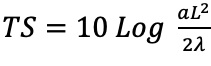
One reason is the Active Acoustic Signature, which is the ability of the submarine to reflect the acoustic wave that hits it. The smaller the submarine, the less acoustic energy it will reflect, making it more difficult for an active sonar (used by ships and aircraft) to detect it. The ability to reflect the acoustic wave is measured in the active sonar equation by the target strength (TS), which measures the acoustic energy reflected by the submarine. Clearly, measuring the TS is very complicated and requires measurement campaigns in acoustic ranges. However, for indicative purposes, we could calculate the TS of a submarine by approximating it to a cylinder,[2] and in this way, we find that the TS of a conventional 2,000-ton submarine is 10db higher than the TS of a compact 200-ton submarine. Considering standard values in the active sonar equation, this translates into a discovery advantage for the compact of about 5,000 yards compared to the conventional. Practically, if the conventional is detected with active sonar at 8,000 yards, the compact will be detected at 3,000 yards. And this is a fundamental advantage when one needs to avoid counter-detection, for example, to breach an ASW screen to position for an attack on a high-value target under escort.
A smaller submarine is not only harder to detect by the active sonar typically used by ships and aircraft, but it is also more challenging to detect by the passive sonar usually used by other submarines. This is because a smaller submarine is also quieter.

This seems logical when considering that a smaller submarine has fewer systems, smaller machinery, requires less energy to operate, and has fewer people onboard generating noise. But there are also other aspects that directly link noisiness to size. For example, the noise generated by the turbulence in a fluid caused by an object moving within it depends on the size of the object and is expressed by the Reynolds number. In this case, approximating the shape of the submarine as a cylinder, we can see how the Reynolds number of a conventional 2,000-ton submarine is 10 times higher than that of a 2,00-ton submarine. This does not mean that the conventional is ten times noisier than a compact, but it is ten times more prone to generate turbulence noise.
Another aspect of noisiness related to size is the cavitation generated by the propeller. This form of noise also depends on the peripheral speed of the propeller blades. At an equal number of revolutions, the peripheral speed of the blades of a larger propeller is greater than that of a smaller propeller, which means that the larger propeller is more prone to generate cavitation noise.
These considerations also coincide with personal experience accumulated over the years while I served aboard Toti-class submarines and participated in numerous ASW exercises within NATO and nationally. Throughout my experience, the Toti-class submarines always demonstrated a significant advantage in terms of passive detection over other alliance submarines engaged in sub versus sub events.
One of the critical advantages of a smaller submarine is its agility and manoeuvrability, which enable it to operate effectively in shallow waters, close to the seabed, and in confined waters where a conventional submarine would face many limitations and be much more exposed to detection.
Considering the vertical safety clearances that a submarine must maintain to move safely, a 2,000-ton submarine needs to keep a safety separation from the seabed and the sea surface of at least 25 metres, while this distance reduces to just nine metres for a 200-ton submarine. This is a fundamental advantage that allows a small submarine to perform far more effectively across a variety of operational mission types. The ability to approach the coast while remaining concealed, blending in with the seabed clutter, allows it to carry out missions such as ISR (Intelligence, Surveillance, and Reconnaissance) much more effectively, as well as operations with Special Forces or mining operations.
Although it may carry fewer mines than a conventional submarine, it can place them strategically, for example, right at the entrance to a harbour or even within it, making this operation much more effective. Being able to get closer to the coast reduces transit times for Special Forces, decreasing their exposure time. ISR operations can also be conducted closer to targets, making them more effective without increasing the risk of counter-detection. These capabilities highlight the unique operational benefits of compact submarines, emphasizing their strategic value in modern naval warfare.
The operational context of littoral waters
Many of the world’s most sensitive areas are of this type. Consider the Arabian Gulf, the Baltic Sea, the South China Sea, the Java Sea, the Gulf of Siam, but also the Black Sea, the Caspian Sea, the Red Sea, the Caribbean Sea, or some areas of the Mediterranean (Adriatic Sea, Aegean Sea, Sicily Channel, Sardinia Channel, Gulf of Taranto). In these regions, compact submarines navigate without difficulty and safely; moreover, they can turn the critical aspects of these environments to their operational advantage, transforming the challenges of these areas into strategic benefits.
The coastal context of these seas further reduces the detection capabilities of anti-submarine measures, making it even more challenging to discover small submarines, which are normally very difficult to detect. Operating near landmasses presents significant challenges for naval operations, impacting a wide range of tactical and environmental factors crucial for maritime strategy. In littoral zones, the effectiveness of electronic sensors and communication systems is heavily influenced by electromagnetic (EM) interference from terrestrial sources, such as cellular networks, radio and TV broadcasts, and other electronic communications prevalent along densely populated coastlines. Additionally, atmospheric anomalies and complex air-sea interactions can lead to unusual EM wave behaviours like subrefraction and super-refraction, which distort signal paths and limit the range and accuracy of radar and other sensors.
These conditions significantly enhance the stealth characteristics of smaller submarines, making them more difficult to detect. For example, a submarine’s periscope or antenna may evade detection due to decreased radar sensitivity and increased clutter from the interface between sea and land. Furthermore, smaller submarines benefit from being less visually detectable by aircraft and are less likely to be localized by systems such as Magnetic Anomaly Detectors (MAD). Their ability to navigate closer to the seabed allows them to exploit the natural sea floor topography for concealment purposes. In turbulent conditions, they can also utilize surface clutter to effectively mask their presence and movements from enemy surveillance.
The strategic use of littoral environments offers unique opportunities for naval forces, especially small submarines, to use terrain for concealment or ambushes. This is particularly effective in regions with dense island chains and heavy surface traffic. Ambient noise levels, heightened in littoral waters due to biological activity on the seabed and noise from nearby human communities, act as an acoustic shield, especially benefiting quieter, smaller submarines. These vessels can leverage the acoustic clutter to remain hidden, thus enhancing their effectiveness in submarine warfare.
The unpredictability of weather in littoral zones, with rapid changes affecting visibility, wave height, and wind patterns, further complicates naval operations and the ability to detect threats effectively.
Based on these considerations, we can assert that compact submarines, being smaller, more elusive, quieter, and very difficult to detect, are ideal vessels for operating in littoral waters, which include coastal contexts and enclosed or semi-enclosed seas. Here, they become formidable adversaries for any naval or underwater asset. In modern maritime warfare, where littoral contexts have gained increasing importance due to the concentration of tension and conflict-prone areas, achieving dominance in the underwater domain – known as Underwater Domain Awareness – is crucial for exercising maritime power and safeguarding strategic maritime interests. For this purpose, these small submarines could play a decisive role. Just a few of these types could exert a powerful deterrent effect or prevent illicit or hostile activities. The knowledge that such elusive and lethal vessels could be present in a certain area, or even the mere suspicion of such a possibility, could deter any naval force from crossing that area or engaging in lengthy and costly ASW clearance operations without ever being certain that the area is free from underwater threats. Furthermore, the potential presence of submarines covertly monitoring an area could thwart illicit maritime activities, much like surveillance systems deter criminals on land – except in this case, it is not clear where the observing systems are positioned, preventing the adoption of countermeasures to avoid detection.
The deployment of compact submarines, armed and operationally as effective as their conventional counterparts, in littoral waters could significantly alter underwater warfare strategies. Contrary to what some may believe, advanced and heavily armed conventional submarines may not effectively neutralize the threat posed by these compact submarines. A small, low-speed submarine camouflaged by ambient noise holds a distinct advantage in detection over a conventional submarine, even if it is advanced and modern. In submarine warfare, victory often belongs to those who detect and strike first, especially if they are small enough to blend into the seabed or surface clutter where even torpedoes struggle to locate them.
This brings us to a critical question: How effectively can larger submarines operate in waters less than 100 meters deep against quieter, equally armed submarines equipped with similar detection systems? This dilemma underscores a significant gap in post-war underwater warfare development, which has predominantly favoured the creation of vessels more suited to blue water operations rather than the green and, more crucially, brown waters where future maritime conflicts are likely to occur. As conflicts shift toward these shallow and complex environments, the limitations of conventional submarine strategies become increasingly apparent.
What, then, is the most effective means to counter these small and dangerous compact submarines? The answer is unequivocal. It involves deploying other compact vessels that may possess a technological edge, providing a strategic advantage over similar adversaries. These advanced compact submarines could redefine the rules of engagement in littoral zones, leveraging their size, stealth, and advanced capabilities to dominate in environments where larger submarines struggle to operate effectively. This strategy not only addresses the tactical challenges of littoral combat but also reshapes the strategic landscape of future maritime conflicts, ensuring adaptability and dominance in evolving naval warfare scenarios.
The prevailing trend to develop capabilities for operating in blue waters has led to the development and acquisition of increasingly advanced and high-performance conventional submarines, overshadowing the essential need to protect littoral waters and maritime interests close to national shores. Similarly, there lacks an effective capability to safeguard confined waters, channels, or strategic straits which hold crucial importance in ensuring the free use of maritime spaces and the global economy against threats posed by compact submarines. This situation highlights a gap in preparedness to counter small vessels like compact submarines, a deficiency that urgently needs to be addressed.
This oversight in strategic maritime defence planning suggests a need for a shift in focus. Naval forces must balance their capabilities to project power in open oceans with robust defences in nearshore and littoral zones. Enhancing littoral combat capabilities, particularly through deploying compact submarines and other suitable assets, will ensure comprehensive security and safeguard vital economic and strategic interests. This recalibration of naval priorities is essential for maintaining maritime dominance and securing the nation’s borders against emergent underwater threats.
Conclusion
This article has endeavoured to debunk prevalent myths surrounding submarine warfare, particularly the misconceived superiority of larger, conventional submarines over their compact counterparts. By means of a thorough examination and comparison, we have highlighted not only the operational effectiveness of compact submarines but also their strategic advantages in littoral combat scenarios.
The discourse has shown that smaller submarines offer substantial benefits such as enhanced stealth, agility, and reduced operational costs, which are often overlooked in mainstream naval strategy discussions. By operating closer to the seabed and utilizing natural maritime features for camouflage, compact submarines can execute missions with a level of discretion that larger vessels simply cannot match. This capability makes them particularly formidable in the increasingly strategic shallow waters of littoral zones, where larger submarines struggle to manoeuvre and remain undetected.
Moreover, the analysis has been deliberately provocative, challenging the status quo of naval procurement and calling for a strategic reassessment of how defence budgets are allocated. It argues against the trend of investing in high-cost, high-tech conventional submarines, which may not deliver proportional advantages in the contexts that are becoming most critical in modern warfare – namely, the complex and confined waters near coastlines.
Considering the evolving maritime threat landscape, this article has suggested that navies should pivot towards enhancing their fleets with these nimble, cost-effective vessels. The reallocation of resources towards compact submarines would not only address the tactical necessities of littoral combat but also ensure that financial expenditures are directed towards capabilities that provide the most substantial return on investment.
In conclusion, as naval forces prepare for future challenges, it becomes imperative to embrace a more nuanced understanding of submarine utility. By acknowledging the significant, yet often underrated, capabilities of compact submarines, naval strategists can better safeguard national interests and maintain security in critical coastal regions. This strategic shift would represent a prudent use of defence funds, prioritizing effective and adaptable military assets over more traditional, and potentially less relevant, maritime force projections.
References
[1] The Future of Battery Technology | S&P Global (spglobal.com).
[2] In our evaluation of the Target Strength, we have approximated the shape of the submarine to that of a cylinder, employing the following formula to calculate the Target Strength value based on the cylinder’s radius (a), length (L), and the frequency in question: